











January, 2004, LOS ANGELES - Happy 2004! Despite the elevated terrorism alert, America managed to carry on with spirit and energy through the New Year holiday. Hundreds of thousands continued gathering at Times Square in New York as they always did, whoopee on the Strip in Las Vegas as they had before, lined Colorado Boulevard in Pasadena, California, as they had for the last 115 years to watch the annual Rose Parade, and millions more celebrated the holidays with friends and family throughout the nation. We were careful and prudent but not daunted by the madness of fanatics.
 The year 2003 ended for me with a joyful cruise around the Caribbean islands of Aruba, Curacao, St. Maartens, and St. Thomas. Seatrek, a cruise with Star Trek fans, organized by Carroll Paige and hard-working Joe Motes, was our defiant thumb in the nose at the terrorists. What a glorious way it was to spend December. Bobbing around a sun-sparkled sea with fans that have become friends over the many years of Star Trek fan gatherings - cruises, conventions, and not just a few serendipitous crossing of paths was a great way to wrap up the year.
 I love traveling to places I've never been before. All of the islands on our itinerary were firsts for me. Apart from the shared fun of the cruise, I learn so much about the world we live in on these trips. On Aruba, we went on a tour to, of all places, an aloe skin lotion factory. It was fascinating to see how the lotion was made. It is freshly processed at the site of the aloe fields, then bottled and sold right there. The cactus-like aloe plant, from which the lotion is derived, was brought to the island about seventy years ago when they discovered that it had powerful skin moisturizing and healing properties. The growing and production of a skin lotion was a good industry for the island. There was, however, a second agenda to bringing the aloe plant to Aruba. It was a time of worldwide depression. There was high unemployment on the island. The cultivation of aloe and the production of the lotion would create hundreds of new jobs for the islanders while raising, at the same time, the economy of the island. This creative political and economic leadership of Aruba impressed me. I felt good about buying an ample supply of the aloe lotion - and righteous to boot.
 Curacao was impressive in a different way. I'm a historic preservationist. Significant old buildings teach us so much of the history of the place. We learn much about the culture, government and spirit of the people from historic structures. How well the built heritage of a community is preserved speaks volumes for its pride. I found Curacao to be a vibrantly proud island indeed. Curacao's colorful old, Dutch colonial buildings were stylishly restored and adapted to new uses as shops, restaurants, and museums. The great, stony fort that guarded the entrance to the harbor had been converted into a lively shopping bazaar with whimsical shops and fun restaurants. Old mansions had been transformed into elegant boutique hotels. On Curacao, I found as well, historic preservation of a very different kind. We explored a primordial cave of stalactites and stalagmites - icicle-like formations created by particles in mineral rich water dripping through the ages. These ancient forms seemed like fantastical works of modern art by Mother Nature. The cave had once served as a hideout for runaway slaves from the sugar plantations during colonial times. Slavery was abolished in the Dutch colonies in 1863 - the same year that President Abraham Lincoln signed the Emancipation Proclamation in the U.S. Half a day on Curacao just was not enough. There is so much that is intriguing about this island. I will definitely have to return to Curacao, an island with a richly preserved history.
 The island of St Maartens has a dual colonial heritage - French and Dutch. There is a border running smack through the island separating the two parts. Yet, despite this division by virtue of its colonial past, the islanders have lived in harmony throughout its history. There are few cultural distinctions. However, we were told that the French side has nude beaches. The Dutch side does not. A few from our ship did spend some time at those beaches on the French side and later were complaining about sunburns in places where the sun had never shone before.
St. Thomas was our last island on the cruise - and a singular discovery. Here, I made - completely by chance - a great find. I was roaming around the busy main shopping district when I found a charming passageway between two ancient buildings. I walked through and found a small courtyard with a series of stairs leading up. My curiosity led me up. The second level had an even smaller open balcony with another set of stairs leading up. I followed it up to find an inviting art gallery at the very top. It was filled with works by local island artists. In chatting with the gallery director, I learned that I had stumbled onto a major historic landmark - the birthplace of the master of impressionist art, Camille Pissarro. Indeed, the gallery was named the Camille Pissarro Gallery. Pissarro was born and raised in this very building and his family had continued to live there after he left for France to become the father of impressionism.
 By happy accident, my nosiness had led me to a wonderful historic discovery. I looked out the windows of the gallery. Each view seemed to have been composed by an artist - the planes of the rooftops, the aged tiles of the balcony below, and, most of all, the voluptuously luminous Caribbean clouds in the sky. It was no wonder that someone born there would become a pioneering artist. To commemorate the happy occasion, I bought a beautiful print of an island scene by a local artist named John Chinery. It will always remind me of my serendipitous discovery of the birthplace of Camille Pissaro.
 The days at sea were times for socializing and enjoying the ship's many amenities. A feature on this ship that I had not seen before on any other cruise ship was a rock-climbing wall. It is a sheer wall the height of a two-story building studded with protrusions and nicks and crannies - sort of like a cliff decorated with odd shaped Christmas tree ornaments. When I was a student at U.C. Berkeley many decades ago, I used to do a little rock climbing. As a matter of fact, I was pretty good at it. So, I studied the wall and strategized. It didn't look too difficult to do. I decided to take a crack at that wall. I got into the helmet and had the attendant strap on my harness as I mentally plotted out the path of my climb. It'll be a piece of cake, I thought.
 But, as I started to climb, I realized that the footings weren't as easy to stay on as I had figured. The grabbings weren't as easy to reach as it looked. With raw determination, I struggled on up. I pulled and I reached and I huffed and I puffed as my muscles began to tremble. Two thirds of the way up, I realized I was not a college student anymore. Gratefully and very humbled, I had the harness lower me down. But, I still did make it up two thirds of the way!
A memory of the cruise that still glows is the sunset catamaran cruise when we were at Aruba. It was all Star Trek fans on board. There were Casey and Aileen, Jack, Chuck, Ann, Donna, Paige, Sallie, Sondra and a whole crew of fun loving trekkers. The clouds on the horizon glowed like luminescent cotton candy - all pink and delicate with a softly shining halo around it. The bartender created a special Caribbean drink - a mixture of blue curacao, orange juice, vodka and something else. The mixture magically turned a Vulcan blood green and it was delicious. Soon, I was glowing like the now pale pink sunset. We chatted and sipped, laughed and sipped, and danced and sipped as the rhythm of the Caribbean music played on and the sun slowly sank into the darkening romantic sea.
Twitter user @Rich_Cooper stated:
"Dear feminists. You either get equality or chivalry. You can't have both."
One user responded:
"I'll take equality. I don't need special treatment."

Cooper's rhetorical question did not go over so well. Both women and men expressed their disdain for his message.
One male user observed that chivalry was irrelevant and treating everyone with kindness and respect was compulsory.
"What people care about is caring, empathic [sic], considerate, thoughtful people, NOT whether THEIR door is held for them or THEIR meal is paid for them."
"Are there gender stereotypes in het[erosexual] dating? Sure. But that's separate from being a warm, giving, caring, grounded person."
Some women got right down to the point.
The notion of chivalry and equality are mutually exclusive and not a lot of people thought it was a major priority for feminists.
Common courtesy is not chivalry.
This user pointed out the fact that chivalry stems from a history of men outdoing other men. The concept had very little to do with women.
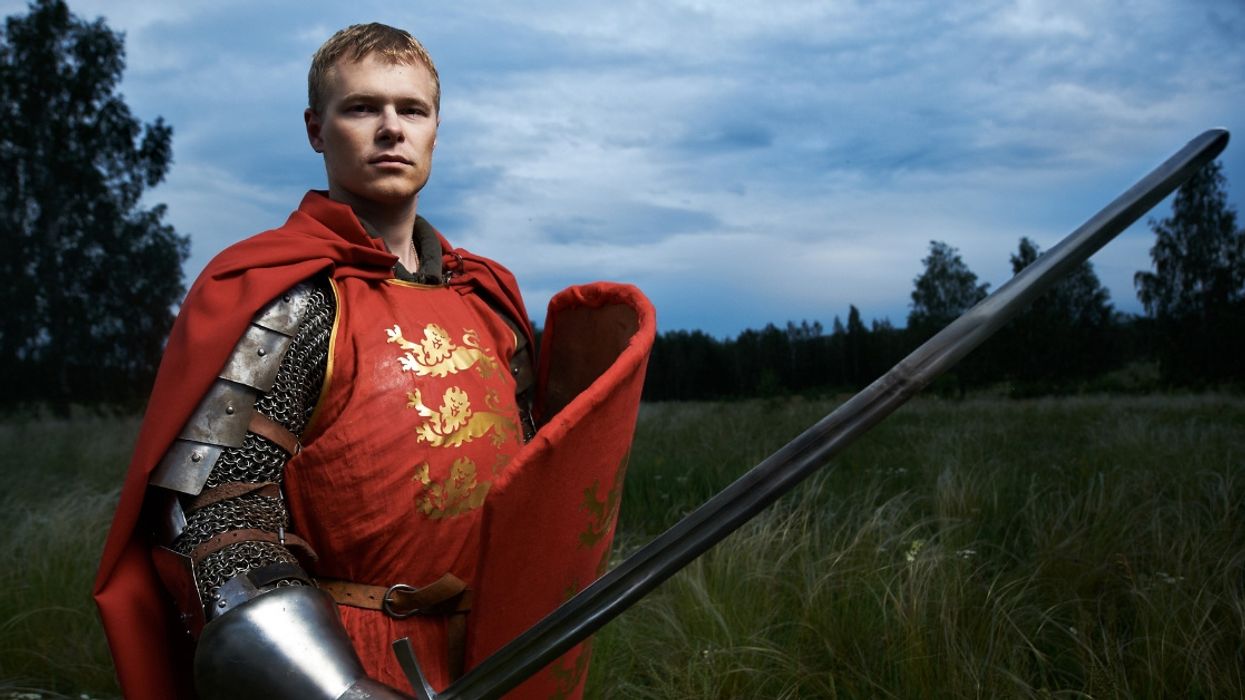
"Chivalry is a medieval concept of men dressing to impress other men. It has little to do with equality."
"Some men were on top, other men were beneath them. Historically, women were rarely invited into the process."
Neil Bradley described the outdated concept of chivalry as one that implies men being superior to women in a September 8, 2017, article for Medium publications.
"Examples: opening the door for a woman, paying for a woman's meal, gesturing for a woman to go first. The justification is either that women are not physically as strong (to open the door), able to provide (pay for their own meal), or are more deserving of compassion than men (allowing women to go first)."
Bradley also added that he wants to treat others the way he wants to be treated and asked if that approach should be motivated by chivalry or equality.
"If the genders are to be considered equal and treated equally, how a man treats a woman will essentially be the same as how a man treats a man."
"The obligation to open the door, pay for the meal, and let women go first vanishes. Men do not do this to other men, therefore why do it for women?"
His final take was that the two concepts can't co-exist. Either one is chivalrous or treats everyone as equals.
At the end of the day, people were happy to show chivalry the door.
H/T - GettyImages, Twitter, Indy100, Medium